
"semi-forest coffee"
400 article(s) found

What's the flavor of Ethiopia's coffee? what's the best brand of coffee in Ethiopia?
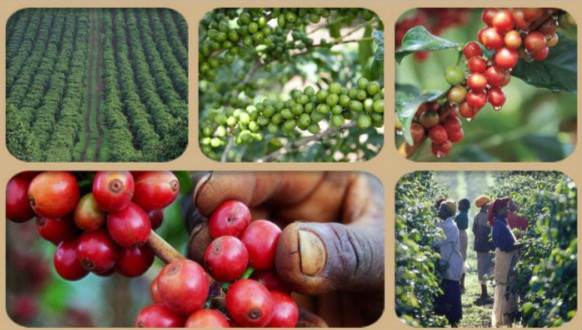
For more information on coffee beans, please follow the Coffee Workshop (official Wechat account cafe_style) although Ethiopia is an underdeveloped country in northeast Africa, it is a famous coffee producer in the world. Ethiopia has the most diverse coffee ecosystem in the world (forest coffee, semi-forest coffee, pastoral coffee and plantation coffee).

Citrus sour Ethiopia | Yega Xuefei YirgacheffeChelelektu
Professional coffee knowledge exchange more coffee bean information please follow the coffee workshop (Wechat official account cafe_style) citrus sour Ethiopia | Yega Xuefei production area Xueyitu YirgacheffeChelelektu coffee bean characteristics and flavor? Chelelektu will return to the warehouse in Antwerp this year! For the second year in a row, we provided a lot at Kochere, a famous laundry station.
Where can I buy coffee beans online? Where can I buy coffee beans? Yega Xuefei Solar treatment of Bancimaji
1. When buying beans online, you should pay attention to the production date, shelf life, packaging and sealing, the roasting degree of coffee beans, the types of coffee beans, and your utensils to determine what kind of beans you want. If you use blue mountain beans to make ESP, it is indeed a maverick way, but it is also too unprofessional and expensive, and the taste is not very good. The production date must be at least

Aromatic and rich Ethiopian coffee flavor Taste Manor Features of producing area Introduction Fine coffee beans
Ethiopian coffee beans grow in a near-natural environment. After years of cultivation under the same growing conditions, Ethiopian coffee beans have gradually adapted to the environment here. More than 60% of coffee beans are forest or semi-forest grown coffee. Coffee farming villages produce about 35 percent of the country's coffee. Many of these are used.

Introduction to the characteristics of the manor producing area of Ethiopian boutique coffee with rich flavor and aromatic taste
Ethiopian coffee beans grow in close to the natural environment, after years of planting under the same growth conditions, Ethiopian coffee beans have gradually adapted to the environment here. More than 60% of coffee beans are grown in forests or semi-forests. Large-scale coffee-growing villages account for about 35% of the country's total coffee production. Many of these are used.

Ethiopia Coffee Origin Information Profile_The World's Most Popular Coffee Origin
Ethiopia is the birthplace of Arabica coffee. In the 10th century, nomadic Ethiopians in the mountains may have been the first to recognize the stimulating effect of coffee, although they ate the red ripe fruit directly, not as a drink.

Grinding and roasting process of boutique coffee beans at Ted Manor in Sidamo, Ethiopia
From a historical point of view, coffee has a great relationship with the history, religion and culture of Ethiopia. Ethiopia in ancient times was called Abyssinia and Axum, which was ruled by the Solomon dynasty. According to literature, the Hamitic people of the Mitt nationality migrated from Asia minor to present-day Ethiopia, and the merchants of Semitic migrated from about seven BC.

The traditional way of drinking coffee in Ethiopia Ethiopia, the world's most diverse coffee producer.
Ethiopia is the Garden of Coffee Eden, the hometown of Coffee. Genesis in the Bible says that the beautiful space where Adam and Eve first lived was the Garden of Eden. God placed the created man there so that all kinds of trees could grow out of the ground, pleasing to the eyes, and some fruit could be used as food. A river flows out of the garden of Eden and moistens the garden, and there is life in the garden.

Ethiopian Coffee Manor-the country with the largest variety of coffee in the world-Ethiopia
For the exchange of professional baristas, please pay attention to the coffee workshop (Wechat official account cafe_style) Ethiopia is the Garden of Coffee, the hometown of Coffee, Genesis in the Bible says that the beautiful space where Adam and Eve first lived was the Garden of Eden, where God placed the man he made so that all kinds of trees could grow out of the ground, pleasing to the eye.

What are the characteristics of Ethiopian coffee? do you know the coffee story of the shepherd Caldi?
Professional coffee knowledge exchange more coffee bean information please follow the coffee workshop (Wechat official account cafe_style) Ethiopia is an underdeveloped country located in northeast Africa, but this country is a world-famous coffee producer. Ethiopia has the most diverse coffee ecosystem in the world (forest coffee, semi-forest coffee, pastoral coffee and plantation coffee).
Ethiopian Coffee | characteristics of Nine boutique producing areas and Coffee Trading system
For more professional coffee exchanges, please scan the code to follow Wechat: FrontStreetCoffee Ethiopian name: Ethiopia location: East African Capital: Adis Abba Addis Ababa Religion: Christian main language: Amharic time Zone: GMT+3 Metrology: metric (Metric) currency: bill Birr (1 $20 birr) Agricultural products (Export): coffee, Flowers, Zhi

Ethiopian coffee climate
Following Cafe (Wechat official account vdailycom) found that Beautiful Cafe opened its own shop for Ethiopian Coffee Climate if you like coffee, there is one more reason to pay attention to climate change. Ethiopia, an important coffee producer, will be greatly affected if global warming is not contained, and at worst nearly 60% of the country's coffee-producing areas will be affected, according to a new study.

Top Ten hand Chong single Coffee Bean Brand recommendation list the price of quality coffee beans with high performance-to-price ratio in China
Professional coffee knowledge exchange more coffee bean information Please pay attention to the coffee workshop (Wechat official account cafe_style) at present, most coffee beans can be divided into Arabica (Arabica) and Robusta (Robusta), among which Arabica is of better quality and is in circulation in the world market.

Unique and mellow Ted Manor Fine Coffee Bean planting situation, Geographic location, Climate and altitude
Ethiopian coffee beans grow in close to the natural environment, after years of planting under the same growth conditions, Ethiopian coffee beans have gradually adapted to the environment here. More than 60% of coffee beans are grown in forests or semi-forests. Large-scale coffee-growing villages account for about 35% of the country's total coffee production. Many of these are used.

A brief introduction to the description of Coffee Flavor and aroma characteristics of Coffee Manor in Ethiopia (Moka)
Due to different planting methods, coffee can be divided into three types: forest-semi-forest coffee (Forest or semi-forest coffee), courtyard coffee (Garden coffee) and plantation coffee (Plantation coffee). 60% of the coffee belongs to forest-semi-forest coffee. In such a wild coffee forest, pesticides are not used at all, but biological methods are used to control pests. 35% of the coffee

Introduction of fine coffee producing areas in Africa-- painstaking finishing
Professional barista communication Please follow the coffee workshop (official Wechat account cafe_style) mention Africa, people's first impressions are: desert, drought, tribe, poverty, mystery and so on. Because of its climatic environment, it has become a paradise for the growth of coffee trees. Today, the editor will share with you some important coffee producing countries in Africa. Coffee Belt and Coffee production Coffee production

A brief introduction to the treatment method of Grinding degree and Baking degree of Fine Coffee beans in Ted Manor
Ethiopian coffee beans grow in close to the natural environment, after years of planting under the same growth conditions, Ethiopian coffee beans have gradually adapted to the environment here. More than 60% of coffee beans are grown in forests or semi-forests. Large-scale coffee-growing villages account for about 35% of the country's total coffee production. Many of these are used.

A brief introduction to the Market Price of Fine Coffee Bean varieties in Ted Manor with exquisite Flowers and plants
Ethiopian coffee beans grow in close to the natural environment, after years of planting under the same growth conditions, Ethiopian coffee beans have gradually adapted to the environment here. More than 60% of coffee beans are grown in forests or semi-forests. Large-scale coffee-growing villages account for about 35% of the country's total coffee production. Many of these are used.

Introduction to the cultivation of coffee beans in Ethiopia _ how to buy coffee beans in Ethiopia
Professional coffee knowledge exchange more coffee bean information please follow the coffee workshop (Wechat official account cafe_style) Ethiopia is located between 3 and 14 degrees north latitude, coffee planting area of nearly 600000 hectares. There are two rainy seasons a year in the south and east of the country, while there is only one rainy season in the west. The distribution of the rainy season is different, so coffee is harvested in Ethiopia all the year round. Coffee